
The Hidden Forces Behind Braces: Unraveling Tooth Movement Mechanics
The transformation of a smile involves more than meets the eye, diving into the complex interplay of physics and biology. As tiny appliances work silently, they orchestrate a symphony of precise adjustments within the oral landscape, where unseen processes harmonize to achieve the art of dental alignment.
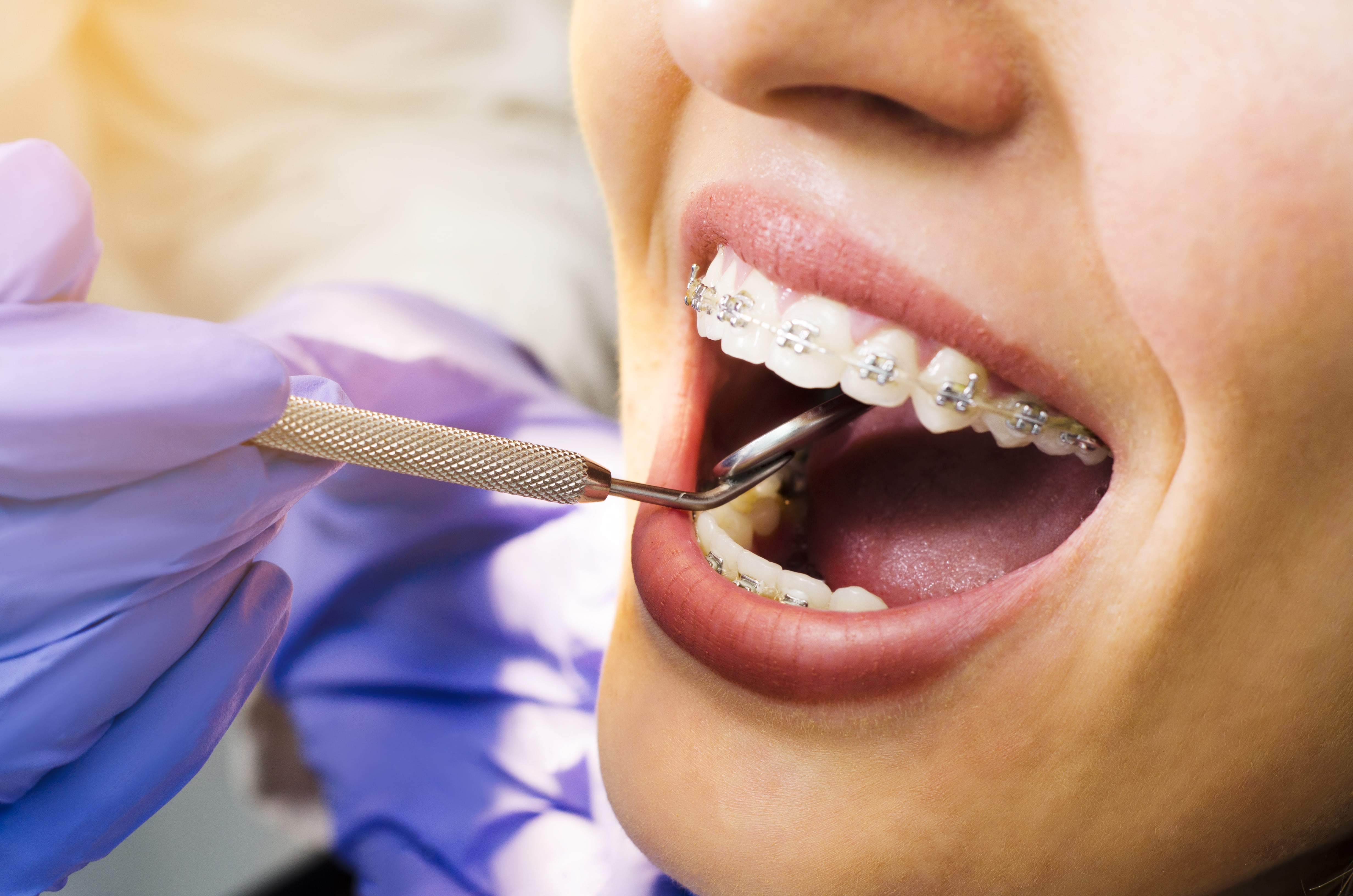
The Biological Symphony Beneath the Gums
The Silent Architecture of Bone Remodeling
When we look at a set of braces, we often imagine a purely mechanical process, similar to dragging a heavy object across the floor. However, the reality of orthodontic treatment is a fascinating biological event that relies on the body's metabolic capabilities. Teeth are not set in concrete; they are suspended in the jawbone by a complex network of fibers known as the periodontal ligament. This ligament acts as a shock absorber and a sensory organ, and it is the primary stage where the magic of tooth movement occurs.
When an orthodontic appliance applies a sustained force to a tooth, it doesn't just "push" the tooth through the bone. Instead, it alters the environment within the periodontal ligament. On the side where pressure is applied (the compression side), blood flow is temporarily restricted, signaling cells known as osteoclasts to begin breaking down the adjacent bone. This clears a path for the tooth to move into. Simultaneously, on the opposite side (the tension side), the fibers are stretched. This stretching stimulates a different set of cells called osteoblasts, which begin building new bone to fill the void left behind.
This synchronized process of resorption and deposition is known as bone remodeling. It is a continuous cycle of breaking down and rebuilding that allows the tooth to migrate through the bone housing without losing stability. Understanding this biological foundation changes the perspective of treatment; it is not about force, but about signaling. The wires and brackets are merely the messengers delivering the request for movement, while the body’s cellular response does the heavy lifting. If the biological response is not respected, the teeth simply will not move, regardless of how much force is applied.
Finding the Optimal Threshold for Movement
In the realm of biological tooth movement, the adage "more is better" is fundamentally incorrect. Patients often assume that tighter braces equate to faster movement, but the physiology of the periodontal ligament dictates otherwise. For the cellular machinery to function correctly, the force applied must be gentle enough to maintain the vitality of the surrounding tissues. If the force is too aggressive, it collapses the tiny blood vessels within the periodontal ligament completely, cutting off the oxygen supply to the area.
When the blood supply is severed, the cells responsible for bone remodeling die off, resulting in a condition called hyalinization or sterile necrosis. Instead of moving, the tooth enters a lag phase where movement stalls completely until the body can clean up the damaged tissue and restart the process. Furthermore, excessive force can lead to unwanted side effects, such as root resorption, where the root of the tooth itself begins to shorten.
Therefore, modern orthodontics focuses on finding the "optimal force"—a threshold that is high enough to stimulate cellular activity but low enough to maintain blood flow and tissue health. This delicate balance ensures that the bone remodeling process remains continuous and efficient. By utilizing consistent, light forces, orthodontists can actually achieve faster tooth movement with significantly less discomfort for the patient. It transforms the treatment from a painful ordeal into a biologically compatible therapy that works in rhythm with the body's natural healing processes.
Mastering the Physics of Alignment
The Geometry of Controlled Movement
Achieving a perfectly aligned smile requires navigating a complex landscape of vectors and fulcrums. A tooth is not a free-floating object; it has a center of resistance, typically located within the root structure embedded in the bone. Because brackets are attached to the crown of the tooth—far from this center of resistance—applying a simple force often results in tipping. Imagine pushing a tall refrigerator from the top; it tilts rather than slides. Similarly, if an orthodontist simply pulls on a tooth's crown, the crown may move in the desired direction, but the root often swings the opposite way.
To counteract this tendency and achieve "bodily movement"—where the crown and root move parallel to each other—orthodontists must employ sophisticated mechanics involving moments and couples. A moment is a rotational force. By twisting the wire within the bracket slot, the orthodontist creates a counter-balancing force that uprights the root while the crown is being moved. This requires precise calculations regarding the ratio of the moment to the applied force.
The complexity of these mechanics varies depending on the type of movement required. For instance, rotating a cylindrical tooth requires a different mechanical approach than depressing a tooth into the gum line. The interplay between the bracket design, the wire's cross-sectional shape, and the distance between the force application point and the center of resistance determines the final trajectory of the tooth. It is a game of three-dimensional chess played in millimeters.
| Movement Type | Description of Mechanics | Complexity Level |
|---|---|---|
| Tipping | A single force is applied to the crown, causing the tooth to spin around its center of resistance. The crown moves one way, the root tips the other. | Low |
| Bodily Movement (Translation) | A force and a counter-moment are applied simultaneously to move the crown and root an equal distance in the same direction. | High |
| Rotation | Two forces act in opposite directions (a couple) to spin the tooth around its long axis without moving it physically from its location. | Moderate |
| Torque | A twisting force is applied to the wire to move the root specifically while keeping the crown relatively stationary. | Very High |
The Strategic Game of Anchorage
One of the most critical concepts in orthodontic physics is Newton’s Third Law: for every action, there is an equal and opposite reaction. In the context of braces, this is known as anchorage control. When a force is applied to retract a protruding front tooth, there must be a stable unit to pull against, usually the back molars. However, the reciprocal force means that while the front tooth moves backward, the back molars are simultaneously being pulled forward.
If this reciprocal force is not managed, the back teeth may slide forward into the space meant for correcting the front teeth, a phenomenon known as anchorage loss. This can compromise the treatment result, leaving insufficient room to fully align the arch. To prevent this, orthodontists treat the mouth like a strategic tug-of-war. They reinforce the "anchor" units, sometimes by connecting multiple back teeth together to create a larger, more stable resistance unit that is harder to move.
In complex cases where absolute stability is required, modern technology utilizes Temporary Anchorage Devices (TADs). These are small micro-screws placed temporarily into the jawbone. Because they are fixed to the bone, they provide an immovable point of leverage. This allows forces to be applied to specific teeth without any unwanted side effects on the rest of the dentition. By carefully managing action and reaction, orthodontists can direct movement precisely where it is needed, ensuring that the final bite alignment is functional and stable.
Material Science and Engineering Efficiency
The Era of Smart Materials
The history of orthodontics is deeply tied to the evolution of metallurgy. In the past, wires were rigid and required frequent tightening, delivering heavy forces that decayed quickly. Today, the landscape has been revolutionized by the introduction of shape memory alloys, particularly Nickel-Titanium (NiTi). These "smart" wires possess a property called super-elasticity, which allows them to undergo significant deformation and still return to their original shape.
When a NiTi wire is deflected to fit into the brackets of crooked teeth, it doesn't just bend; it undergoes a phase transformation in its crystal structure. As it attempts to return to its original arch form, it delivers a light, constant force over a long period. This is crucial for the biological requirements discussed earlier. Unlike stainless steel, which exerts a high force that drops off rapidly as the tooth moves a fraction of a millimeter, NiTi continues to work for weeks, guiding teeth gently and continuously.
This material evolution means that patients experience less pain because the peak forces are lower. It also means fewer office visits are required to reactivate the appliance. The wire acts almost like a battery, storing energy and releasing it slowly to maintain the optimal stress levels on the periodontal ligament. As treatment progresses and major alignments are achieved, orthodontists will switch to stiffer materials like stainless steel or beta-titanium to fine-tune the positions and secure the roots, effectively passing the baton between materials with different physical properties.
| Wire Material | Key Characteristic | Clinical Role |
|---|---|---|
| Nickel-Titanium (NiTi) | Super-elasticity and Shape Memory | Used in the initial stages to unravel crowded teeth with light, continuous pressure. |
| Stainless Steel (SS) | High stiffness and formability | Used in later stages for stabilizing the arch, closing spaces, and detailed root positioning. |
| Beta-Titanium (TMA) | Intermediate stiffness and bendability | A hybrid option often used for finishing stages where some flexibility and formability are both needed. |
The Friction Equation in Clinical Success
Within the bracket-wire interface, there is a constant battle against friction. Friction is the resistance encountered when the tooth slides along the wire. If the friction levels are too high, a significant portion of the force applied by the orthodontist is lost just trying to overcome this resistance, rather than moving the tooth. This is particularly relevant during the "sliding mechanics" phase, where teeth are moved along the archwire to close gaps.
High friction acts like a brake on tooth movement. It requires the orthodontist to apply heavier forces to get the tooth moving, which, as we know, can overstress the periodontal tissues and tax the anchorage units. To combat this, engineering advancements have led to the development of self-ligating brackets. Unlike traditional brackets that use rubber bands to hold the wire—creating a high-friction rubber-on-metal interface—self-ligating brackets use a passive metal door or clip to secure the wire.
This design creates a loose tube effect, drastically reducing friction and allowing the tooth to glide more freely. This efficiency allows for the use of even lighter forces, further enhancing patient comfort and potentially shortening treatment times. Additionally, the analysis of stress distribution has led to clear aligner therapies, which bypass friction entirely by pushing teeth rather than sliding them along a track. Whether through advanced bracket geometry or new appliance designs, managing the drag forces within the mouth is essential for efficient, predictable biological remodeling.
Q&A
-
What is Force Vector Calibration in orthodontics?
Force Vector Calibration is a process used in orthodontics to ensure that the forces applied to teeth are accurate and effective. This involves adjusting the direction and magnitude of the force vectors to achieve the desired tooth movement while minimizing unnecessary stress on the periodontal tissues.
-
How do Moment To Force Ratios influence orthodontic treatment?
Moment To Force Ratios are crucial in determining the balance of rotational and translational forces applied to teeth during orthodontic treatment. A precise ratio ensures controlled tooth movement, reducing the risk of damage to the dental structure and improving the efficiency of the treatment.
-
What role does Anchorage Control Dynamics play in orthodontic procedures?
Anchorage Control Dynamics refers to the management of anchor points in orthodontic treatments, which are used to provide a stable base for applying forces to teeth. Proper control is vital to prevent unwanted movement of anchor teeth and to ensure that the desired tooth movements are achieved efficiently.
-
Why is Stress Distribution Analysis important in Periodontal Response Modeling?
Stress Distribution Analysis is important in Periodontal Response Modeling as it helps predict how forces applied during orthodontic treatment will affect the periodontal ligament and surrounding bone. By understanding the distribution of stress, orthodontists can adjust treatment plans to avoid excessive stress that could lead to tissue damage or resorption, ensuring a healthy response from the periodontium.