
Designing Smiles: The Art and Science of Aesthetic Dentures
In the evolving world of dental aesthetics, the creation of lifelike prosthetics has reached new heights with innovations in the materials and techniques used to craft natural expressions. As societal preferences shift towards a more personalized appearance, these advancements are making an indelible impact.
Engineering a Stable Foundation
Biocompatible Anchors and Physical Stability
The most transformative leap in modern prosthetic dentistry lies in the evolution of the underlying support system. Historically, the primary complaint regarding removable dentures was the persistent instability—the fear of slippage during conversation or the inability to chew firm foods. Today, this narrative has shifted dramatically through the use of highly biocompatible materials like titanium. By functioning as an artificial root, these anchors integrate directly with the jawbone, a process that mimics the stability of natural teeth.
This secure foundation does more than just hold the prosthetic in place; it restores a sense of psychological security. When a patient can bite into an apple or laugh without reservation, the prosthetic ceases to be a foreign object and becomes an integrated part of their body. This integration is achieved through meticulous planning, where the placement of these anchors is tailored to the individual’s bone density and anatomical structure. Unlike the "floating" sensation of traditional solutions, this anchored approach provides the necessary resistance against bite forces, significantly reducing the physical and mental stress associated with tooth loss. The result is a restoration of function that allows patients to return to their normal dietary habits and social interactions immediately, bridging the gap between artificiality and natural biomechanics.
Strategic Angulation for Immediate Results
Recent advancements in physics-based dental engineering have revolutionized how these foundations are laid, particularly for patients with varying degrees of bone loss. Conventionally, it was believed that every missing tooth required a corresponding anchor, a method that was both invasive and costly. However, modern techniques now utilize a strategic architectural approach, often supporting an entire arch of teeth on as few as four implants. The innovation lies in the geometry: rather than inserting anchors vertically, they are placed at specific angles.
This angular placement increases the surface area of contact between the implant and the bone, bypassing the need for complex bone grafting in many cases. It also allows practitioners to navigate around sensitive anatomical structures like nerves and sinuses with greater safety. Perhaps the most profound benefit of this engineering feat is the potential for immediate function. In many scenarios, the structural integrity provided by this angulation allows for the attachment of a provisional set of teeth on the very same day as the surgery. This "immediate loading" capability means patients no longer have to endure a toothless transition period. With high long-term survival rates, this method offers a rapid, permanent solution that restores both the smile and the structural support of the face in a single streamlined process.
The Physics of Optical Illusion
Material Translucency and Light Refraction
The secret to a prosthetic that goes undetected lies in how it interacts with light. In the past, denture teeth were often made of uniform, opaque acrylics that reflected light directly off the surface, resulting in a flat, "matte paint" appearance that looked undeniably artificial. Contemporary aesthetic dentistry has overcome this by adopting materials like zirconia and lithium disilicate ceramics, which mimic the optical properties of natural enamel.
Natural teeth are not solid white blocks; they are translucent prisms. Light penetrates the outer enamel, travels through the tooth, and scatters from within. Modern high-performance materials are engineered to replicate this internal diffusion. They possess varying degrees of translucency—clearer at the biting edge and more saturated near the gum line—creating a depth that paint alone cannot achieve. When sunlight or indoor lighting hits these materials, they exhibit "opalescence," a subtle play of color and light that makes the tooth look alive.
| Feature | Traditional Acrylic Materials | Modern High-Performance Ceramics |
|---|---|---|
| Light Interaction | Reflects light off the surface (Opaque/Flat) | Transmits and scatters light internally (Translucent/Deep) |
| Color Appearance | Monochromatic and uniform | Multi-layered gradient mimicking natural enamel |
| Durability | Prone to staining and wear over time | Highly resistant to abrasion and discoloration |
| Surface Texture | Smooth but artificial feel | Texturized to reflect light like natural organic matter |
This structural mimicry ensures that the prosthetic blends seamlessly with any remaining natural teeth. Furthermore, the durability of these ceramics means that this optical interplay does not degrade over time. Unlike older plastics that would yellow or lose their luster, modern materials maintain their refractive qualities, ensuring the smile remains radiant and indistinguishable from natural dentition for years.
Chromatic Complexity and Gingival Artistry
Creating a convincing smile extends far beyond the white of the teeth; the "pink aesthetics," or the appearance of the gum tissue, are equally critical. A common giveaway of traditional dentures was the flat, uniform pink plastic used to simulate gums. It lacked the vascularity and texture of living tissue. Today, the art of gum characterization has become a specialized discipline. Technicians now use composite materials infused with microscopic fibers to replicate the delicate capillary networks found in natural gingiva.
The coloring process involves layering multiple shades of red, pink, and purple to mimic the natural variations in blood flow and tissue depth. This is not a standardized process but a bespoke one, matched to the patient’s natural complexion and remaining oral tissue. Furthermore, the shape of the gum line—the "festooning"—is sculpted to create the natural convexities and stippling (texture) of healthy gums. When a person smiles, the interplay between the white ceramic and the textured, multi-tonal pink base creates a cohesive, organic look. This attention to the gingival architecture ensures that even under close inspection or bright lighting, the boundary between the prosthetic and the natural soft tissue is virtually invisible, completing the illusion of a naturally grown smile.
Digital Precision and Personalized Design
Facial Harmony and Virtual Prototyping
The era of manual trial-and-error is being superseded by a fully digital workflow that places facial harmony at the center of the design process. Every face is unique, and a set of teeth that looks perfect on one person may look unnatural on another. Using intraoral scanners and facial imaging software, dental professionals can now capture the oral environment in micron-level detail without the discomfort of traditional impression goo.
This data allows for "facially driven design." Instead of simply filling the gap with teeth, the software analyzes the relationship between the lips, the eyes, and the jawline. It calculates how the teeth should support the lips to reduce wrinkles and restore a youthful profile. Before a physical model is ever touched, a "virtual mockup" allows the patient to see their future smile on a screen, simulating how it will look while talking or laughing. This collaborative approach ensures that the size, shape, and arrangement of the teeth complement the individual’s personality—whether that means softening the edges for a gentler look or squaring them for a bolder appearance.
| Design Aspect | Conventional Approach | Digital Aesthetic Workflow |
|---|---|---|
| Measurement | Physical molds (often uncomfortable) | 3D Intraoral Scanning (contactless, precise) |
| Visualization | Physical wax try-in needed to see results | Virtual simulation available before production |
| Customization | Standardized tooth shapes/molds | Bespoke shapes tailored to facial geometry |
| Fit Accuracy | Relies on manual adjustments | Micron-level precision milling/printing |
This precision extends to the fit, minimizing the friction and sore spots that plagued traditional denture wearers. By integrating the biological data with aesthetic preferences, the digital workflow delivers a prosthetic that is not only visually stunning but functionally superior from the moment of insertion.
Advanced Adhesion and Long-Term Integrity
While the visible aspects of a smile garner the most attention, the longevity and comfort of the restoration rely heavily on invisible chemistry: the adhesion technology. Modern dental bonding has evolved from simple mechanical retention to complex chemical integration. New generations of cements and adhesives form a molecular bond between the prosthetic material (such as zirconia) and the underlying tooth structure or implant abutment.
This strong seal is vital for hygiene and durability. By eliminating microscopic gaps where bacteria could thrive, these advanced adhesives prevent the development of secondary decay and unpleasant odors, which were common issues in older restorative work. The application process has also become more efficient, utilizing "universal" bonding agents that reduce chair time and sensitivity for the patient.
Furthermore, the robustness of this bond enables the preservation of more natural tooth structure when preparing the mouth for restoration. Instead of aggressively grinding down teeth to create mechanical locks, dentists can rely on the adhesive strength to hold thinner, more conservative restorations in place. This synergy between high-strength materials and advanced chemical bonding ensures that the aesthetic investment is protected, allowing the patient to enjoy their restored smile with the confidence that it can withstand the rigors of daily life for decades.
Q&A
-
What is custom denture shading, and why is it important?
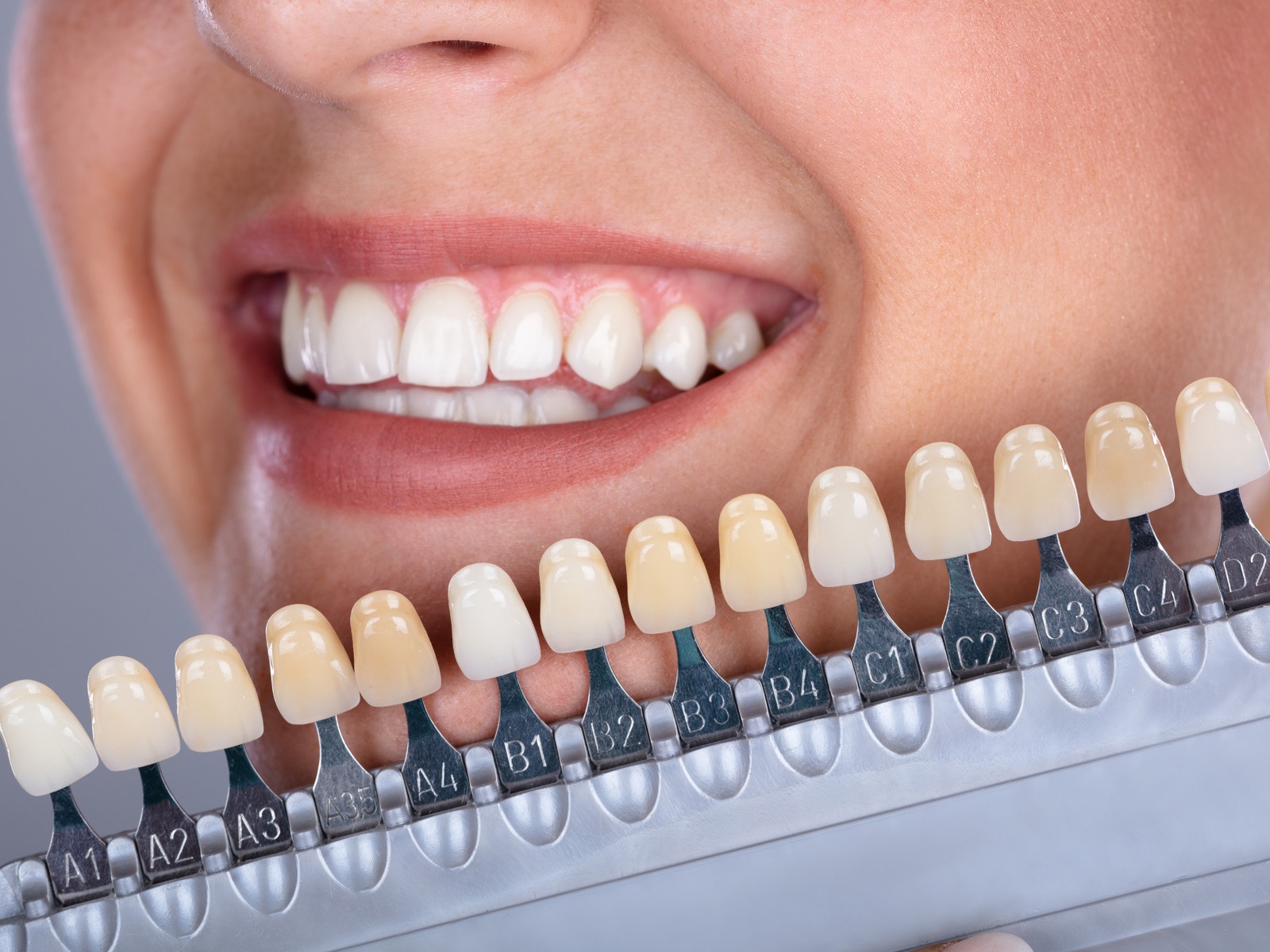
Custom denture shading involves tailoring the color of dentures to match the natural hue of a patient’s existing teeth and gums. This process is crucial for achieving a realistic appearance, ensuring that dentures blend seamlessly with the natural oral aesthetics of the individual, enhancing confidence and comfort.
-
How does denture tooth selection impact the overall appearance of dentures?
Denture tooth selection is a critical step in denture creation, as it involves choosing the size, shape, and color of the teeth. Proper selection ensures that the dentures not only fit well but also mimic the patient's natural teeth, contributing to a harmonious and natural-looking smile.
-
What role does gum tinting play in the creation of dentures?
Gum tinting for dentures is the process of coloring the acrylic base to mimic the natural appearance of gums. This technique enhances the overall realism of the dentures, as it accounts for the variations in gum color among individuals, providing a more personalized and authentic look.
-
How can designing a natural smile with dentures benefit individuals?
Designing a natural smile with dentures involves considering the patient’s facial features, age, and personality to create a smile that looks and feels natural. This personalized approach not only improves aesthetics but also boosts the wearer’s self-esteem and social interactions by providing a more genuine appearance.
-
What are the benefits of personalized denture creation and instant denture makeovers?
Personalized denture creation allows for a bespoke approach to crafting dentures, ensuring that they meet the specific needs and preferences of the patient. Instant denture makeovers can provide immediate improvements in appearance, offering a quick solution for those needing rapid aesthetic enhancements, and can be particularly beneficial for special occasions or professional engagements.