
From Scans to Simulations: The New Era of Orthodontic Innovation
In recent years, the field of orthodontics has been fundamentally altered by technological innovation. Driven by revolutionary tools and sophisticated techniques, today's practices can achieve unprecedented levels of accuracy and efficiency. This transformation promises to significantly improve both patient experiences and treatment outcomes.
Redefining the Patient Experience with High-Fidelity Imaging
Escaping the Discomfort of Traditional Molds
For decades, the initial step in any orthodontic journey was synonymous with discomfort. Patients often recall the unpleasant sensation of having a metal tray filled with cold, gooey impression material inserted into their mouths. They had to sit perfectly still for several minutes while the material set, a process that frequently triggered the gag reflex and caused significant anxiety, particularly for children or those with sensitive airways. This analog method, while effective for its time, was a significant barrier to entry for many potential patients who dreaded the physical intrusion.
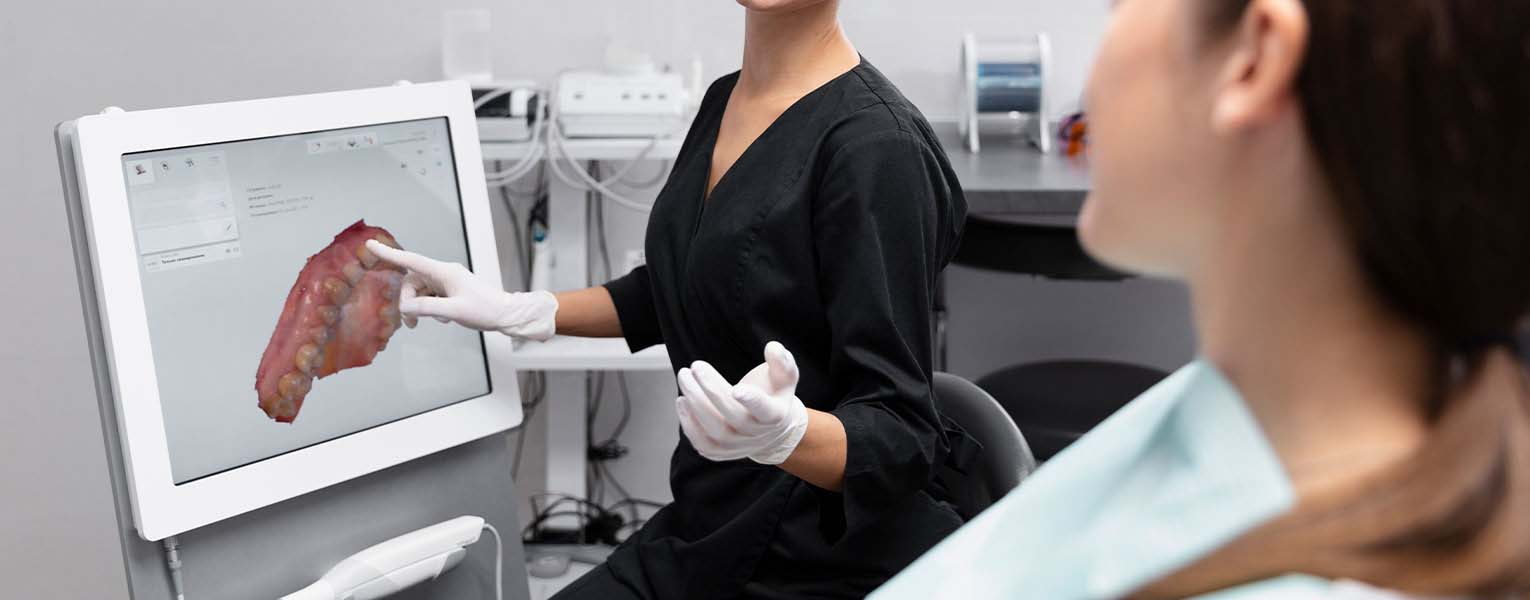
The introduction of modern optical capture technology has completely revolutionized this experience. Instead of messy putties, clinicians now use a sleek, handheld wand to capture the geometry of the teeth and gums. This process is remarkably fast and entirely non-invasive. The wand glides comfortably inside the mouth, capturing thousands of images per second without touching the throat or causing breathing difficulties. Patients can relax, often watching a screen as their teeth appear in real-time, turning a once-dreaded appointment into an interactive and educational experience. This shift not only alleviates stress but also drastically reduces the time spent in the dental chair.
By removing the physical discomfort associated with diagnostics, practices are seeing a shift in patient psychology. The fear of "starting" treatment is reduced, and the immediate visualization of their own oral anatomy fosters a sense of engagement. The elimination of physical storage for plaster models also means a cleaner, more sustainable clinic environment. Ultimately, this technology places patient comfort at the forefront, signaling that the journey to a new smile will be smooth, modern, and respectful of their well-being.
From Visuals to Volumetric Precision
Beyond the immediate improvements in comfort, the shift to optical scanning represents a massive leap in technical fidelity. Traditional impression materials were subject to physical limitations; they could distort upon removal from the mouth, develop air bubbles, or expand and contract with temperature changes during shipping to a lab. These minor imperfections could lead to appliances that didn't fit perfectly, requiring uncomfortable adjustments or remakes. The digital counterpart, however, operates with micron-level exactness, capturing the finest details of tooth surfaces and interdental spaces that the naked eye might miss.
This high-resolution data serves as more than just a 3D picture; it is a mathematically precise volume that forms the foundation of the entire treatment plan. Because the data is digital, it is immune to physical degradation. A scan taken today will remain identical ten years from now, providing an immutable record of the patient's starting point. Clinicians can manipulate this model on a screen, rotating it to inspect bite relationships from angles that would be impossible to see directly inside the mouth.
The implications for appliance fabrication are profound. whether creating clear aligners, retainers, or custom metal appliances, the fit is dictated by the quality of the initial data. With digital precision, devices snap into place with satisfying accuracy, reducing the "break-in" period for patients. This level of detail allows for the diagnosis of issues such as tooth wear, gum recession, and arch asymmetry with a clarity that analog methods simply could not provide. It empowers the orthodontist to diagnose with confidence and ensures that the physical tools used to move teeth are built upon a flawless digital foundation.
| Feature Comparison | Conventional Analog Methods | Modern Digital Workflows |
|---|---|---|
| Data Acquisition | Physical impressions causing potential discomfort and gag reflex | Contactless optical scanning offering a comfortable, rapid experience |
| Accuracy & Storage | Susceptible to material distortion; requires physical storage space | Micron-level precision; permanent cloud-based storage without degradation |
| Patient Engagement | Static plaster models that are difficult to visualize or explain | Interactive 3D models allowing patients to see potential outcomes instantly |
| Turnaround Time | Slower due to shipping physical models to laboratories | Instant data transmission allowing for faster appliance fabrication |
The Art and Science of Computational Treatment Design
Visualizing the Perfect Smile Before It Happens
One of the most powerful aspects of modern orthodontic care is the ability to bridge the gap between abstract clinical goals and the patient's desire for a beautiful smile. In the past, explaining a treatment plan involved pointing at X-rays or generic diagrams, leaving the patient to guess what the final result might look like. Today, specialized software transforms the initial scan into a dynamic simulation. This "virtual setup" allows both the doctor and the patient to view a movie-like progression of the treatment, watching as crowded teeth unravel and gaps close.
This process is commonly referred to as "smile design." It is a collaborative session where the clinician can adjust the position of specific teeth on the screen to harmonize with the patient's facial features and lip line. For example, if a patient is concerned about the prominence of their front teeth, the doctor can simulate different retraction scenarios to find the aesthetic sweet spot. This visual confirmation is incredibly motivating; patients are no longer buying a procedure, they are investing in a clearly defined outcome that they have seen and approved.
Furthermore, this virtualization allows for complex problem-solving before any appliances are manufactured. In difficult cases involving surgical interventions or missing teeth, the software allows the team to test multiple strategies in the digital realm. They can compare "Plan A" against "Plan B" to see which offers the best balance of aesthetics, function, and treatment time. This reduces the likelihood of mid-treatment surprises and aligns the patient’s expectations with clinical realities, fostering a relationship built on transparency and shared vision.
Algorithmic Efficiency in Tooth Movement
Beneath the visual appeal of 3D simulations lies a sophisticated engine of biomechanics. Moving a tooth is not as simple as pushing it from point A to point B; it involves complex biological responses within the bone and gum tissue. Modern planning software utilizes advanced algorithms to calculate the most efficient path for each tooth, ensuring that the forces applied are within the physiological limits of the body. This computational approach prevents "round-tripping," a phenomenon in manual mechanics where a tooth is moved back and forth unnecessarily, which can extend treatment time and risk root resorption.
These intelligent systems allow clinicians to program distinct movements for distinct stages. For instance, in aligner therapy, the software can be instructed to rotate a canine tooth first to create space before tipping an incisor back. This is known as "staging," and it ensures that there is always sufficient anchorage—stable teeth to push against—to effect the desired movement. It is akin to solving a complex sliding puzzle where every move is calculated to facilitate the next, minimizing wasted energy and time.
The result of this algorithmic guidance is a treatment that is often faster and less painful. By applying consistent, gentle forces exactly where they are needed, the inflammation associated with tooth movement is kept to a managed level. The software can also identify potential collisions between teeth that might prevent movement, prompting the doctor to prescribe precise smoothing of enamel (IPR) at the exact right moment. This fusion of biological knowledge and computational power means that the "guesswork" is largely removed from the equation, replaced by a strategic, engineering-based approach to biology.
Precision Engineering in Appliance Delivery and Monitoring
Optimizing Hardware Positioning Through Digital Mapping
For patients undergoing fixed appliance therapy (braces), the precise placement of the bracket on the tooth is the single most critical factor in determining the efficiency of the treatment. Traditionally, orthodontists would place these brackets by hand, one by one, relying on their eyesight and manual dexterity to judge the center of the tooth. While effective in skilled hands, this method is prone to minor variations that can result in the need for wire bending and adjustments later in the process to correct tooth height or rotation.
Digital technology has introduced a method known as indirect bonding, which fundamentally changes this workflow. Using the 3D model of the patient's teeth, the orthodontist places virtual brackets on the screen. This digital environment allows for zooming in and viewing the tooth from all angles, ensuring the hardware is positioned to express the exact prescription needed for that specific tooth's anatomy. Once the virtual design is finalized, a custom transfer tray is 3D printed. This tray holds the real brackets in their perfect pre-calculated positions, allowing the doctor to bond all of them to the patient's teeth simultaneously.
This technique offers significant benefits. The accuracy of the placement reduces the need for mid-treatment repositioning, which can shorten the overall time a patient spends in braces. Furthermore, because the brackets are placed all at once using the tray, the initial bonding appointment is much shorter and more comfortable for the patient. The bond strength is also often improved because the tray ensures uniform pressure and optimal adhesive thickness, reducing the annoyance of "popped" brackets that require emergency visits.
Harnessing Cloud Connectivity for Continuous Care
The management of orthodontic data has migrated from filing cabinets to secure, cloud-based ecosystems, enabling a new era of connectivity. In the past, a patient's records were tethered to a physical location. If a specialist needed to consult with a general dentist or a surgeon, physical records had to be copied and mailed. Today, secure cloud platforms allow for instant, encrypted sharing of heavy 3D files and high-definition images between collaborators. This is particularly vital for complex interdisciplinary cases, ensuring that every professional involved is looking at the exact same up-to-date data.
This connectivity extends to the monitoring of treatment progress. Remote monitoring solutions now allow patients to scan their own teeth at home using their smartphones and specialized attachments. These images are uploaded to the cloud where AI analyzes them against the treatment plan. If the teeth are tracking perfectly, the patient gets a notification to proceed to the next aligner or that their hygiene is excellent. If a discrepancy is detected, the system alerts the clinical team to intervene.
This "virtual loop" reduces the number of physical appointments needed for routine checks, respecting the patient's time while maintaining close supervision. It transforms orthodontics from a reactive model—fixing problems after they are noticed at a monthly visit—to a proactive one, where deviations are caught and corrected in real-time. For the clinic, cloud architecture means that data is safe from local hardware failures and accessible from any terminal, streamlining the administrative workflow and allowing the focus to remain on patient care.
| Data Insight Category | Impact on Clinical Decision Making | Patient Benefit |
|---|---|---|
| Historical Case Analysis | Utilizes vast databases to predict movement success rates based on similar past cases | realistic expectations and more accurate treatment duration estimates |
| Real-Time Monitoring | Compares current tooth position against the digital plan to detect lag immediately | Fewer unnecessary office visits and faster correction of tracking issues |
| Outcome Simulation | Visualizes the final aesthetic result before treatment begins | Higher motivation and confidence in the investment of time and money |
The Predictive Power of Big Data in Clinical Outcomes
The final frontier of this digital evolution is the utilization of aggregated data to predict clinical outcomes with scientific rigor. Every digital case adds to a growing global repository of tooth movement data. By analyzing millions of treated cases, machine learning algorithms can now identify patterns that human observation might miss. They can predict with high probability how a specific type of tooth movement will respond to a specific plastic material or force system, factoring in variables like age and root shape.
This shift towards data-driven prediction moves the industry away from "trial and error" toward "predict and prevent." Before a patient even starts, the system can flag movements that have historically been difficult to achieve, prompting the doctor to add auxiliary techniques or adjust the velocity of movement. It serves as a sophisticated quality control check, validating the doctor's plan against the reality of millions of previous outcomes.
For the patient, this means a higher degree of certainty. When a treatment is estimated to take 12 months, that estimation is backed by statistical evidence rather than just a best guess. It also helps in designing retention protocols—strategies to keep teeth straight after braces are removed—by analyzing risk factors for relapse. As these databases grow, the software becomes smarter, continuously refining its predictions. This symbiosis of human clinical expertise and machine intelligence ensures that the future of orthodontics is not just about straightening teeth, but about delivering consistent, stable, and healthy results with a reliability that was previously unattainable.
Q&A
-
What is the importance of Intraoral Scanning Precision in modern dentistry?
Intraoral scanning precision is critical in modern dentistry as it ensures the accurate capture of a patient's dental anatomy. High precision in scanning leads to better fitting restorations, improved treatment outcomes, and enhanced patient comfort. It reduces the need for physical impressions, which can be uncomfortable and less accurate, and supports the seamless integration of digital workflows in dental practices.
-
How does Virtual Treatment Planning enhance patient care?
Virtual treatment planning enhances patient care by allowing dentists to visualize and simulate the treatment process before actual procedures begin. This approach helps in identifying potential issues, optimizing treatment strategies, and ensuring that the final outcomes align with patient expectations. It also facilitates better communication between the dentist and the patient, as the latter can see a preview of the treatment results.
-
What role does AI Based Tooth Movement Simulation play in orthodontics?
AI based tooth movement simulation plays a transformative role in orthodontics by predicting how teeth will move over time with treatment. This technology uses machine learning algorithms to simulate various scenarios, allowing orthodontists to choose the most effective treatment plans. It improves the accuracy of treatments, reduces treatment times, and enhances patient satisfaction by providing realistic expectations of the treatment process and outcomes.
-
How is Digital Bracket Placement changing orthodontic treatments?
Digital bracket placement is revolutionizing orthodontic treatments by enabling more precise and efficient application of braces. Using digital models and advanced software, orthodontists can determine the optimal position for brackets, which enhances the effectiveness of the treatment. This method minimizes human error, reduces chair time during appointments, and often results in more predictable and faster treatment results.
-
What are the benefits of Cloud Based Case Monitoring in dental practices?
Cloud based case monitoring offers numerous benefits in dental practices, including improved accessibility to patient records and treatment plans from any location. It enhances collaboration among dental professionals by allowing real-time updates and sharing of information. This approach also improves data security and backup, ensuring that patient information is protected and easily recoverable. Additionally, it supports the integration of advanced analytics for better treatment outcome predictions and overall practice management.