
Crafting Dentures: A Seamless Blend of Artistry and Precision
Crafting a smile that is both functional and aesthetically pleasing involves a meticulous journey marked by precision and artistry. Beginning with initial assessments and progressing through various customized stages, this intricate process seamlessly culminates in a creation that reflects the art and science of dental innovation.
The Foundation of a Personalized Restoration
Initial Consultation and Strategic Blueprinting
The creation of a high-quality dental prosthesis begins long before any physical materials are mixed. The first and perhaps most critical step involves a comprehensive evaluation of the oral environment from a professional perspective. This phase goes far beyond simply noting which teeth are missing; it involves a holistic assessment of the gum tissue health, the underlying bone structure, and the integrity of any remaining natural teeth. This evaluation serves as the groundwork, much like the foundation of a building, ensuring that the future prosthetic will remain stable, functional, and comfortable for years to come.
During this initial consultation, the dialogue between the clinician and the patient is paramount. It is a time to align the clinical realities with the patient's personal lifestyle, budgetary considerations, and specific desires. Whether the goal is to chew tough foods with confidence or to restore a natural, youthful appearance to the face, these specific requests help shape a bespoke treatment plan. By sharing detailed history and current concerns, a personalized blueprint is created. If no surgical interventions like extractions or implants are required, this process is generally non-invasive and conducted in a relaxed atmosphere, setting a positive tone for the collaborative journey ahead.
Capturing the Unique Anatomy
Once the oral condition is fully understood, the process moves to capturing the precise topography of the mouth. This step generates the master mold upon which the entire prosthesis will be constructed. Using specialized trays, a soft, impressionable material is introduced into the mouth to create an exact negative replica of the gums, ridges, and surrounding soft tissues. This is a moment of high precision; the resulting model will dictate the fit, retention, and ultimate comfort of the final appliance.
While many patients may feel anxious about this stage due to the potential for a gag reflex, modern advancements have significantly improved the experience. Contemporary materials are designed to be fast-setting and flavor-neutral, minimizing discomfort and reducing the time the tray must remain in the mouth. The goal here is to capture not just the static shape of the gums, but also the dynamic anatomical landmarks, such as muscle attachments and the natural curve of the jaw. By recording these minute details, the clinical team ensures that the final result respects the natural movements of the mucosa, resulting in a custom-made device that is truly unique to the individual’s anatomy.
Defining Function and Aesthetics
Establishing the Vertical Dimension and Jaw Relationship
Perhaps the most technically demanding aspect of the fabrication process is determining exactly how the upper and lower jaws relate to one another. A dental prosthesis is not merely a cosmetic cover; it is a mechanical device that must function seamlessly during eating and speaking. This stage involves recording the "bite," or the precise vertical height and horizontal position where the teeth should meet. Using temporary bases, often rimmed with wax, the clinician meticulously adjusts the height to find the position that is most natural for the jaw muscles and joints.
This step is the cornerstone of functionality. If the recorded position is off by even a few millimeters, it can lead to difficulties in chewing, speech impediments, or even chronic jaw pain. The clinician must observe the patient’s facial muscles, the position of the jaw at rest, and the movement of the joints to find the physiological "neutral zone." It is a process that balances the mechanical requirements of leverage and force with the biological reality of the patient's muscular system. This record acts as the architectural navigation system for the laboratory technicians, ensuring that when the artificial teeth are set, they meet perfectly to distribute force evenly.
The Intersection of Science and Artistry
The phase of recording the bite is where clinical science meets artistic intuition. While instruments can measure distances and angles, they cannot fully quantify "harmony." The height of the bite directly influences the facial profile; the correct dimension supports the lips and cheeks, potentially smoothing out wrinkles and restoring a more youthful facial contour. This is akin to portraiture, where the clinician must visualize the final outcome and adjust the wax rims to support the soft tissues properly.
To achieve this, specific materials are utilized that offer stability without distortion. The wax or silicone used for registration must be rigid enough to hold the shape during transport to the lab but soft enough to register the finest details of the bite. The selection of these materials is based on their thermal properties and dimensional stability—a true application of material science. Simultaneously, the clinician is making artistic decisions: how much tooth should show when the patient smiles? How does the lower jaw move during speech? By integrating these aesthetic observations with the scientific data of the jaw relationship, the team crafts a solution that looks as natural as it functions.
| Evaluation Factor | Scientific/Functional Goal | Artistic/Aesthetic Goal |
|---|---|---|
| Vertical Dimension | Ensures muscle comfort and efficient chewing power without straining the TMJ. | Restores proper facial height, reducing deep folds and supporting the lips for a youthful look. |
| Tooth Positioning | Aligns teeth over the bone ridge for maximum stability and leverage during mastication. | Arranges teeth to create a natural smile line, ensuring proper visibility during speech and laughter. |
| Jaw Relation | Records the precise centric relation where the jaw joints are most stable. | Aligns the facial midline and ensures the chin position looks natural and balanced with the rest of the face. |
Visualization and Final Fabrication
The Try-In: A Preview of the Future Smile
Before the final materials are processed, there is a crucial dress rehearsal known as the "wax try-in." At this stage, the actual artificial teeth are set in a temporary pink wax base. This allows the patient to place the prototype in their mouth and see a tangible preview of their new smile. It is a moment of revelation, where abstract expectations become reality. Looking in the mirror, the patient can assess the color, shape, and arrangement of the teeth against their own facial features.
This appointment is not just about vanity; it is a critical functional test. The patient is asked to speak, smile, and move their jaw to check for any interference. Pronunciation of sibilant sounds like "s" and "sh" is checked to ensure the teeth are not set too far forward or back. Because the teeth are held in wax, they can still be moved. If the patient feels a tooth is twisted too much or the gum line is too high, it can be altered right there in the chair. This collaborative verification ensures that there are no surprises upon final delivery, and it empowers the patient to have a direct hand in the design of their own smile.
The Laboratory Transformation
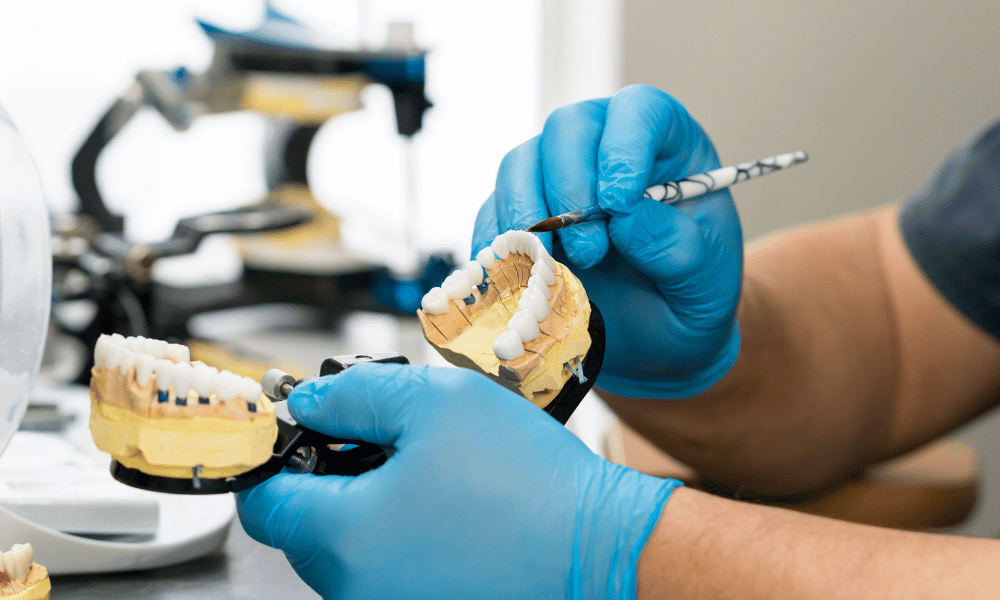
Once the design is approved during the try-in, the prototype returns to the laboratory for the final transformation. This is a process of converting the temporary wax and baseplate into durable, hygienic acrylic resin. The wax model is sealed in a flask and invested in plaster to create a mold. The wax is then melted away—a technique known as the "lost wax" process—leaving a cavity that is exactly the shape of the denture.
Into this void, high-impact acrylic resin is injected and cured under controlled heat and pressure. This chemical process must be managed with extreme care; incorrect temperatures can cause the material to shrink or warp, ruining the fit established in earlier steps. After curing, the prosthesis is de-flasked, but it is far from finished. Skilled technicians then spend hours contouring and polishing the device. They texturize the "gum" portion to mimic the stippling of natural tissue and polish the borders to be smooth against the delicate mouth lining. The result is a robust, glass-like appliance that resists bacteria and looks indistinguishable from natural dentition.
Delivery and the Adaptation Journey
Final Insertion and Precision Tuning
The delivery appointment is the culmination of weeks of detailed work. When the finished prosthesis is placed in the mouth, the focus shifts to microscopic refinements. Even with the most accurate impressions, the hard acrylic may exert slight pressure on the soft, yielding tissues of the mouth. The clinician uses pressure-indicating pastes and thin articulating paper to identify these high spots.
Patients are asked to bite down and grind their teeth gently. The colored marks left by the paper reveal where the contact is too heavy. These spots are meticulously relieved using precision burrs. The goal is to achieve "balanced occlusion," where the teeth touch evenly on both sides simultaneously. This stability prevents the denture from tipping or dislodging during chewing. The aesthetic outcome is also confirmed one last time in natural light, ensuring the patient walks out with a smile that feels secure and looks harmonious with their overall appearance.
The Reality of Adaptation and Maintenance
Leaving the clinic with a new prosthesis marks the beginning of a physical adaptation period. Just as a runner must break in new shoes, the oral tissues must condition themselves to the new appliance. Initially, there may be increased saliva flow, minor speech difficulties, or sore spots as the muscles and nerves navigate the new foreign object. This is a normal physiological response, not a sign of failure.
Patients are encouraged to start with a soft diet and practice reading aloud to retrain the tongue for clear speech. Maintenance is equally vital; because the appliance is porous, it requires dedicated cleaning with non-abrasive cleaners to prevent bacterial buildup. Over time, the jawbone naturally resorbs and changes shape, meaning the fit will eventually alter. Regular check-ups are essential to monitor these changes. Professional relining or adjustments ensure the prosthesis continues to function as an extension of the body, allowing the patient to forget they are wearing it and simply enjoy their life.
| Challenge Phase | What to Expect | Recommended Solution/Action |
|---|---|---|
| First 24-48 Hours | Excess saliva, feeling of "fullness" in the mouth, minor gagging sensation. | Keep the prosthesis in as much as possible to help nerves desensitize; swallow frequently or suck on a sugar-free mint. |
| First Week | Difficulty with certain words, minor sore spots on gums, trouble biting tough food. | Read aloud to practice tongue placement; eat soft foods cut into small pieces; schedule an adjustment for persistent sores. |
| Long Term | Looseness due to bone changes, staining, odor. | Use daily soaking cleansers (not toothpaste); visit the dentist annually for fit checks and professional hard or soft relines. |
Q&A
-
What is the purpose of dental impressions for dentures?
Dental impressions for dentures are used to create a precise mold of a patient's mouth. This mold helps in crafting dentures that fit comfortably and accurately. The impression captures the unique contours and alignment of the patient's gums and existing teeth, ensuring that the dentures will function properly and enhance the patient's oral health.
-
How does bite registration influence the denture-making process?
Bite registration is critical in ensuring that dentures will align correctly with the patient's bite. It records the way a patient's upper and lower jaws come together. This information is vital for the dental technician to make sure that the dentures will not only fit well but also provide proper function and comfort when chewing and speaking.
-
What happens during a denture try-in appointment?
During a denture try-in appointment, the patient has the opportunity to try on a preliminary version of the dentures. This allows both the patient and the dentist to evaluate the fit, comfort, and appearance of the dentures. Adjustments can be made to the shape, color, and fit before the final dentures are fabricated, ensuring satisfaction with the final product.
-
What is the role of a denture fabrication lab in the denture creation process?
A denture fabrication lab is where the physical creation of the dentures takes place. Skilled technicians use the dental impressions, bite registration, and try-in feedback to craft the final set of dentures. The lab ensures that the materials used are durable and that the dentures are constructed to the exact specifications required for a perfect fit and optimal functionality.
-
Why are post-delivery adjustments necessary after receiving dentures?
Post-delivery adjustments are essential because they address any discomfort or fit issues that may arise after the patient starts wearing the dentures. As the patient adapts to the new dentures, they might experience sore spots or difficulties in speaking and chewing. Adjustments ensure that the dentures remain comfortable and functional, promoting better oral health and overall satisfaction.